Sometimes It’s Just Not About The Gift

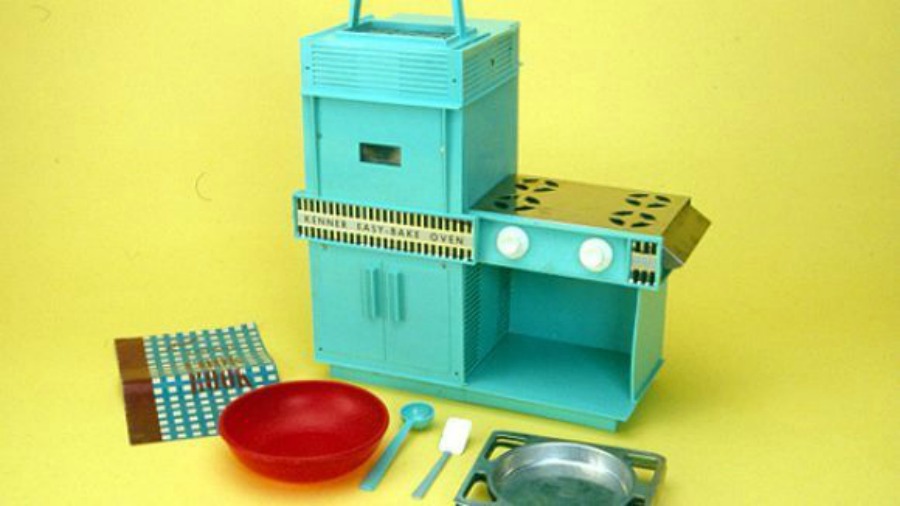
In 1963, the Easy-Bake Oven was introduced to millions of future little bakers around the world. And I was one of them. Excited, didn’t quite come close to that tickled-pink moment when my mother placed it in front of me, all wrapped in a box and bow so beautifully. For a long time I just sat there transfixed. Probably because I wasn’t used to getting gifts out of the blue other than a birthday or Chanukah. So yeah this was a big deal for me and she knew it. And although I was rather amazed by the gadgetry, the bowl, the utensils, all the tools of my new trade, I had no grand illusions what this strange miniature replica of a oven complete with Betty Crocker cake mixes, would actually produce. Didn’t need to be Mr. Peabody to figure that one out.

Didn’t care.

All that mattered was the  joy of being a kid who just so happened to have a new toy that everyone wanted. And better still a toy that would allow me to flex my tiny MasterChef Junior wings of creativity and soar to those heights and boundaries yet untested. Needless to say I was in heaven. I was whipping, I was folding, I was beating those ingredients senseless. And with each new thumbnail masterpiece popping out of a lightbulb-operated oven it was there in the kitchen baking side-by-side with my mother that something wonderful, something enduring began to cement as I sensed the first glimmer of who I was, who she was and all the many things she would, in time, come to do for me.
Like all children and folks with puffy egos we believe we know everything. So naturally whatever words of wisdom were imparted to me in those early years fell on dummy ears. Fell but lay silent in the background of life’s noises just waiting for the right time and the right me to pick them back up. It would be a while before that happened. A long while. You could say from ages twelve to twenty the relationship I had with my mother was pretty typical. We were a family of women. So yeah, hormones bounced off walls and knocked down doors on a somewhat regular basis. Having a few good days interspersed with a truckload of bad ones. And more often than not hurtful things were said, things I couldn’t take back, things I didn’t give a second thought to.

Then.

But with each passing year while a part of me continued to sow my oats at every garden patch or farm I passed, another part somehow managed to look beyond all that petty bickering knowing, also instinctually, that the day of reckoning was closer than I could possibly imagine. A day when I’d gaze into the mirror and it would be my mother’s face staring back — not mine.

                                                                               *     *     *     *

In my sixty plus years on this planet, I’ve often thought about the complexity of mother-daughter relationships. How the stories behind them are not always so simple, rather they’re hard and sometimes heartbreaking. And yet despite whatever anguish prevails, so too does this one common denominator. Love. A love that sits and waits. A love that transcends, that connects a moral compass pointing home. Always, always pointing home. Even for someone like me. The girl who wore that “badass daughter” badge like nobody’s business. I know I put my mother through the proverbial tunnel of hell and back. Sometimes I actually believed that was my mission in life. To make her as miserable as she was making me. Maybe as kids we all feel that way. Maybe that’s simply part of the rebellion thing. I don’t know. I just did it with such gusto it was a wonder she still had enough energy left over after all that to love me, let alone like me.

But she did. She remained vigilant to see me through. She clung on fiercely like a drowning swimmer. A stance that told me I needed to start paying attention, I needed to listen and more importantly, I needed to learn.

Many years ago I experienced what I call this “aha” moment. A formative split-second realization while sitting at my sister’s deathbed, that today is all we have. All I have. And if I don’t show my mother how I feel about her and NOW in the simple and ordinary ways: a phone call, a kind and patient word, a visit and an “I love you,” I’d regret it for the rest of my life. It’s hard to believe that in the middle of all that fucking crap landing in my lap, I had a wake-up call. But if not then … when?

I think this is what it all comes down to. As much as I’d love to keep Hallmark and 1–800 Flowers in business, there’s no way I can set aside just one day out of the entire year to honor my mother. Nor can I possibly squeeze into a twenty-four hour timeframe a verbal list of all those incredible sacrifices, those things she’s taught me about life, about being the kind of woman, the kind of mother I need to be, the meaning of unconditional love, that relationships worth having are hard fucking work and those that aren’t don’t waste your time with, how to have grace in the face of death, not to slouch, make sure I take care of my skin earlier than later, and that friends are those superstars who stick around long after the shit hits the fan … I simply can’t.

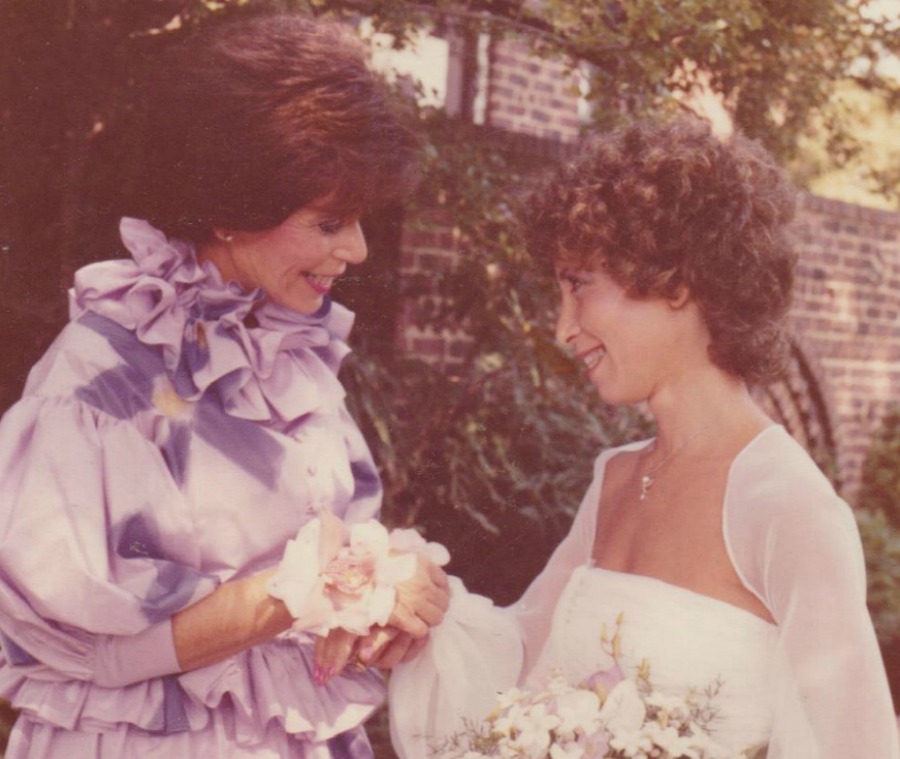
So as I stare out the window and see my mother slowly and carefully walking up the path in the direction of my house, my Dad right there by her side, all I can say is how incredibly lucky I feel. How grateful and dare I say blessed (us Jews don’t really use that term too often), that she’s still with me. And while the tables are now turned and it’s me showing her a thing or two in the kitchen, me helping her transition from the stone age to the digital age, and me acting as her steadying arm in and out of cars and up sidewalks — I’m okay with that.

More than okay.

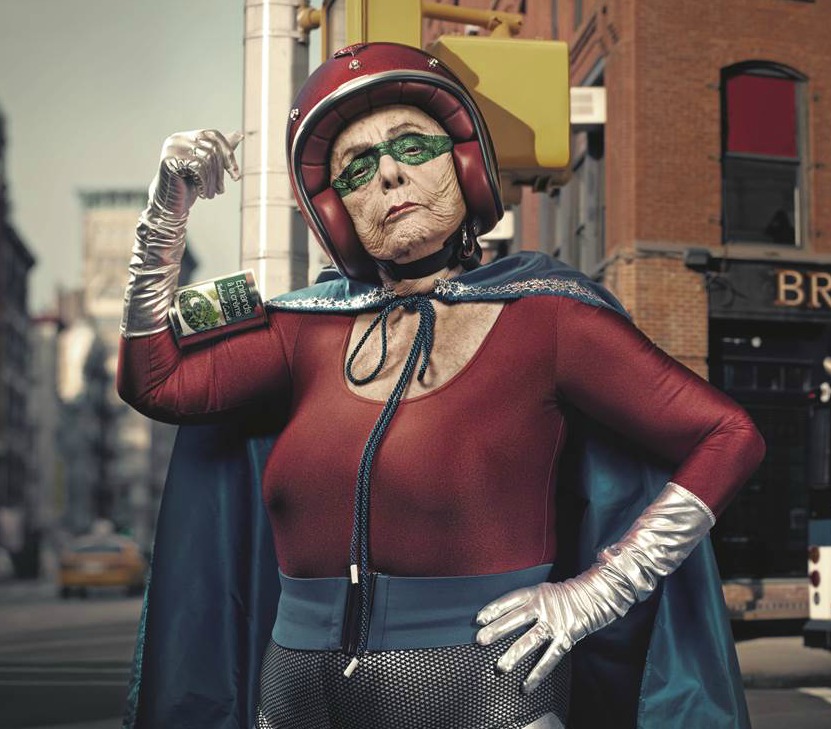
You know, we all have our heroes. They come to us in the most diverse parade of shades, shapes and bulletproof uniforms. Mine just so happened to come in the form of a cute, ninety-year-old lady named Mom.
(This essay had been previously posted but since I gave it a major facelift, I decided to give it another go-around.) Hope you liked it! Thanks and love.

Photo source

8 Comments -Leave a Comment

The Face of FEMA

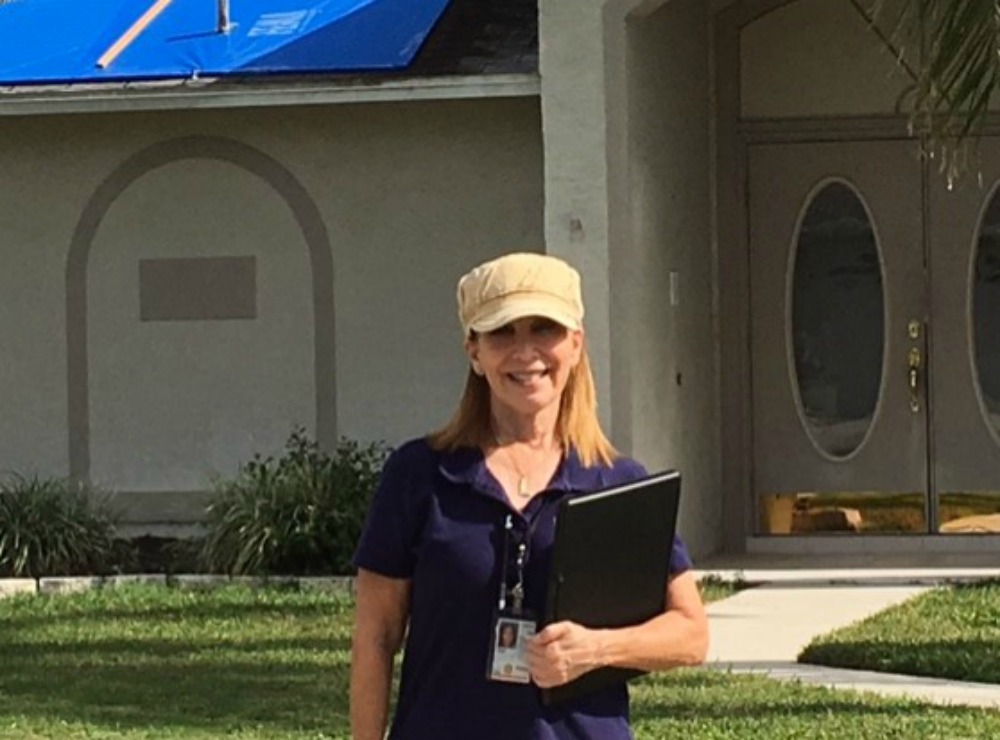
When Hurricane Sandy hit in 2012 I was thousands of miles away in Europe with my family on a riverboat floating on the Danube somewhere between Budapest and Passau fixed to the television screen watching New York’s Rockaway Beach (the place where we were all born and raised) being bombarded with monsoon-like waves and wind.

Ten days later I landed at LAX. Then as a FEMA Reservist working my first deployment I was on the next plane out for New York. I can’t express the anguish in my heart, the trepidation I was experiencing in those very, long hours before I touched down at LaGuardia, before I saw it all for myself. I knew it wouldn’t be good. And it wasn’t.

I spent the next six weeks shuttling in the car between the city and Long Beach, where I was assigned. At night before I would head back, I would take the drive down Central Ave, loop around past my old house — that’s no longer there — to the beach, then just ride that long stretch of Beach Channel Drive all the while staring vacantly out the window, feeling the only thing I could: devastated.

The beginning days were the hardest. They’re always the hardest as people come to grips with their new reality. It’s like a fog lingering, but lifting just enough to see the river of water inside their house, the pots and pans and toys and bits of furniture floating about as if looking for a life preserver to rescue them. Nothing makes this right. When tragedy hits we’ll all on the same playing field. It’s one person in need and one person reaching out to help.

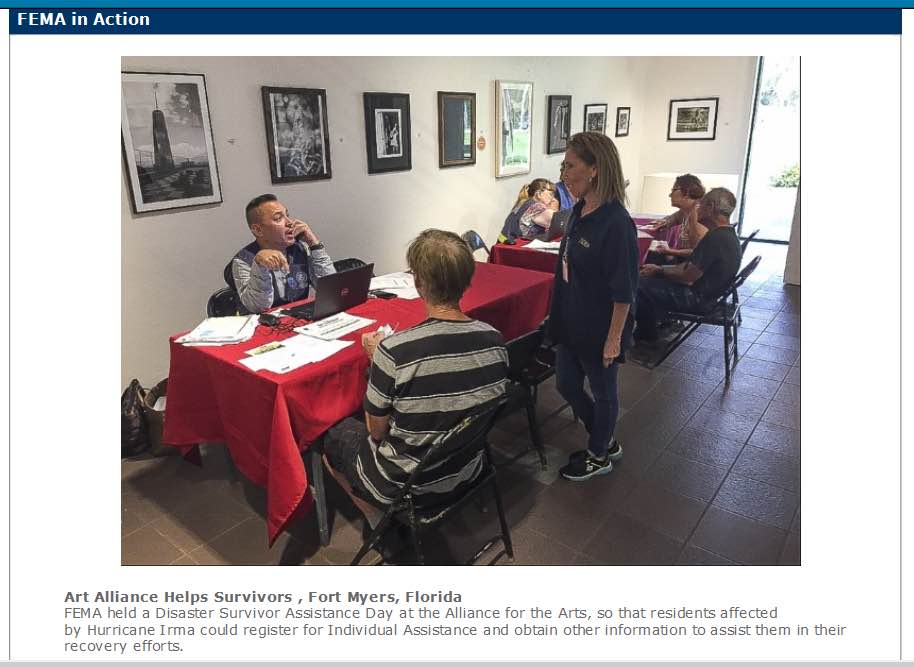
I’m always blown away by the transformation that takes place during these times. People become people. Their humanity is luminous. I’ve witnessed this repeatedly and without fail in my years working for FEMA. Seeing that glimmer of gratitude on survivors’ faces when being handed cans of food, blankets, water, clothing. Or when you show up at a shelter where auditoriums are filled to the brim with cots and crying babies and tell mothers and fathers a check is on the way. Just by being there, hope finds its way back.

You know when you think about it hope is such a small word. But in the FEMA world, it’s the glue that holds it all together.

Over the years I’ve seen a lot of America I wouldn’t normally. And from time to time, in between the long hours going from door-to-door, listening to survivors, seeing the damage, ensuring their environment is safe, registering them, getting them to a local food pantry, anything and everything it takes to survive a disaster, I write about it.

I write about it because I don’t want to forget all the wonderful people I meet along the way. I don’t want to forget their unbelievable stories, their bravery in the face of what would make some of us crumble. And most of all I don’t want to forget their humility.

Two years ago working Louisiana after record-breaking flooding took over most of the state, I found myself on the front porch of a house that from the street appeared abandoned. The yard was like a swamp with overgrowth clinging to the entire exterior and not a sign of life anywhere. Someone else might have passed this house by and not bothered to check. But unfortunately, after seeing all that I’ve seen, I was not at all surprised when the old man came to the door. I can’t describe the condition of his home. As Reservists, for safety reasons, we’re not permitted to go inside. But my partner and I didn’t need to. From the threshold we could see and smell the mold growing along the ceiling and walls. We could see the piles of damp clothes spread out in every corner. We could hear the despair in his voice because he had no family to turn to. Within forty-five minutes we had registered him for financial assistance. We had arranged for temporary housing, located a neighbor to drive him. Made sure social services were available to him and armed him with all the telephone numbers and referrals he would need to take that next step.

You know throughout this entire process not once did this kindly old gentleman utter a complaint about his situation when it was so obvious he had everything to complain about. Instead, he stood there in this humble pose and thanked us over and over. That is the image I took away. This man living in the most deplorable of conditions, smiling and thanking me when deep in my heart I was the one thanking him.

I realize not everyone feels that way about FEMA. Some folks don’t get that warm and fuzzy glow. I remember right after I’d published my first book I was in New Jersey speaking at a book club. Naturally, everyone was curious with questions and eager to discuss the characters and storylines. It isn’t every day a book club has the author right there to get into the nitty-gritty of things. Anyway, somehow it was brought to light that I wasn’t just a writer, I double-dutied as a FEMA Reservist. It was as if someone had just dropped a bomb because one of the women stood up and gave me a verbal lashing that I’ll never forget. It seems her daughter didn’t fare well during Hurricane Sandy and unfortunately laid that blame on FEMA’s doorstep. And I being the face of FEMA was equally to blame.

Forget that it put a kibosh in the evening. I’m a big girl. Getting the finger, being called all sorts of names is nothing new. I can’t explain to people, especially those who don’t want to hear, that FEMA’s job isn’t to make people whole but to offer a leg up. A hand of assistance.

And to some … that’s everything.

Not everyone can say they love what they do. Not everyone gets the opportunity to be part of something bigger themselves on a somewhat regular basis. And I only know that I’m given the tools to make a difference and when I deploy, when I knock on someone’s door, I hope to God I do.

4 Comments -Leave a Comment

The Grief Club. Membership Non-Negotiable.

For a whole amalgamation of reasons, people die. Whether we want them to or not because death comes to us all. It’s the inevitable consequence of life. An equal opportunity purveyor of souls that doesn’t give a rat’s ass about the color of your skin, your age, your religion, your gender, sexual or political affiliation. It’s just that cruel and real and does not get any easier navigating through just because we know it’s coming — for those that leave, and for those that remain behind.

Thirty years ago my sister died of melanoma. Marilyn had just turned thirty-seven. I wish I could say my sister passed away quietly in her sleep. I wish I could say she felt no pain, wasn’t consciously aware of what was happening to her in those final weeks and moments leading up to her death when she’d lost all power of speech and lay in a vegetative state connected to a machine.

Oh yes, I’d love to believe that. But I knew differently. I knew despite her not uttering a word, or moving a muscle, the truth was after months of the usual fare on the cancer menu: radiation, chemo, blood transfusion, brain surgery and thoughts lost in moments of what would never be, my sister left this world pretty much in the same manner she came. Kicking and screaming. An unwilling comrade in this battle who did not go quietly into that good night as she silently fought, cried, yelled at an unforgiving God in a way that only warriors do when facing death. Ruthlessly and defiantly.

With me right by her side.

In the early hours before dawn as my family kept vigil, she waited for them all to leave the hospital room in order for us to be alone. There we said our goodbyes the only way we could, me clutching her hand, caressing her cheek, whispering, “I love you, it’s okay to go,” over and over. Everything inside those moments as I stood there, was utterly excruciating, waiting for the preordained. And when I saw her chest rise with what I knew was her final breath, I thought I would die with her.

And a part of me did.

In the days following her death things became what I would consider surreal. Cleaning out her apartment. The funeral. Sitting shiva. Everything and everyone around me appeared normal, in my mind though it was anything but as I lingered on the sidelines watching this muted macabre of bodies dressed all in black like a swarm of busy beetles, eating, drinking, carrying deli platters across the room as if this was just another family gathering.

I was lost in an infinite sea. Truly, truly lost. Unanchored to nothing or no one. And it was then when I felt myself sinking to this deep, dark abyss where I wasn’t sure anymore whether or not I wanted to hold on, I heard my sister’s voice in my head. So clear, so her … talking to me. At first I thought I was losing it. But as the conversation between us continued, the words filtering into my brain as if we were standing there together in the same room, something told me this was real. It just had to be Marilyn. Who else would be dictating to me what shoes to wear, that I better lay off the ice cream, why I needed to get rid of this thing and that, all the wonderfully nagging, bossy bitch things she would say to me when she was alive?

Like in life, she had remained my companion. The dialogue continued on a regular basis over the next twelve months. But then one day, right around the anniversary of her physical death, without warning, without so much of a goodbye, her voice disappeared. Suffice to say I was crushed to the bone as if she’d died all over again.

Over the past thirty years, I’ve thought a lot about the impact of death, the grieving process and that one burning question I’m positive we all ask ourselves from time to time, but never more so than when something divine shifts in the air and we’re forced to suspend our most fundamental belief. Is death really that final disconnect for us? In the physical sense, I think we can all agree that’s a yes. But on that beautifully tragic terrain where grief, loss, and love collide … maybe, just maybe not. What I experienced with my sister is something I know I’m not alone with. And if I’m not alone then we must allow for a greater landscape of possibilities that transcend the tangible. How as a civilization we perceive death. How we assimilate it. How we use it as a barometer from which we base our own lives because death is that never-again thing that happens to you where you’re suddenly facing a new reality that nine out of ten times isn’t so rosy. When death comes knocking … it owns you. It marks you. Then sucks you into a place from which you’ll never escape. Not completely or whole in the way you were before.

The reality is that you will grieve forever. You will not ‘get over’ the loss of a loved one; you will learn to live with it. You will heal and you will rebuild yourself around the loss you have suffered. You will be whole again but you will never be the same. Nor should you be the same, nor would you want to.” — Elisabeth Kübler-Ross, Psychiatrist

In the 1969 groundbreaking book, On Death and Dying, Kübler-Ross laid out her theories on the five stages of grief: denial, anger, bargaining, depression, and acceptance. It was her contention that “through these stages we learn to live with the one we lost. They are tools to help us frame and identify what we may be feeling. But they are not stops on some linear timeline in grief. Not everyone goes through all of them or in a prescribed order.”

I read this book. Although it offered some insightful things to consider as a whole, it fell short of helping me in any way. I knew immediately the bargaining stage, the acceptance, the denial, the depression didn’t apply. It was, however, the anger stage, the pure bitterness that stuck in my chest like barbed wire that I knew I simply could not get beyond.

For a long, long time.

I’ve come to believe that grief is a lonely, lingering sort of pain. Something that simply doesn’t go away. It has a beginning, but most times no end. The terrain is forever different and there’s no normal to return to while you learn to work through the mess. Oh yeah, it’s hard. It’s fucking brutal. Sometimes even frightening to the point ending it all seems the perfect solution. The only solution. But then you stop. You take a breath, look around at all you have to lose should you go down that path, then slug on.

One day at a time.

In the popular 1993 movie, Sleepless with Seattle, the main character, played by Tom Hanks, lost his wife, and the son seeing the depth of his father’s grief, feeling unable to reach him on his own, dials into a self-help guru for help.

Dr. Marcia Fieldstone: Sam, do you think there’s someone out there you could love as much as your wife?

Sam Baldwin: Well, Dr. Marcia Fieldstone, that’s hard to imagine.

Doctor Marcia Fieldstone: What are you going to do?

Sam Baldwin: Well, I’m gonna get out of bed every morning … breathe in and out all day long. Then, after a while I won’t have to remind myself to get out of bed every morning and breathe in and out … and, then after a while, I won’t have to think about how I had it great and perfect for a while.”

The truth is when it comes to loss and grief as a culture we’re still very much behind the eight ball. We need to readjust the lens and see it for what it is. A process that can’t be fixed, dismissed, contained or forced into some sort of consensual form of expression. Because there are no one-size-fits-all, no pill or magic formula on how to get through it since grief has a mind of its own.

This is a club no one wants to be part of. It’s a membership that lasts for life. But with the right amount of support, time and endurance and resiliency, your status eventually does change and the darkness begins to lift.

It took me a long, long time to talk openly about my sister. The pain so bottomless the thought of it freaked me out, finding it so much easier to hold onto my armor rather than search for an understanding ear that would never replace the one I had lost. But twenty-five years after the fact, I did. And it felt like a door had cracked open. The sadness didn’t feel as intense, the hole in my heart not as wide, and the rock I’d been carrying around in my pocket with me all those years, not as heavy.

From the moment my sister died I understood that grief would always walk beside me. I understood it could not be rushed and that anyone experiencing a tragic loss, be it a loved one, a pet, a bad decision, a failed business, being told to “get over it,” was the last thing they wanted to hear. Because in truth, there’s no real getting over, letting go, or moving on. There’s simply you moving forward, letting life resume.

And that’s what I did. Sort of.

I woke up every morning. I breathed in and out. I saw sparks of something resembling happiness and grabbed it by the horns. I came to realize that although I might never let go of this sense of feeling cheated, or guilty that she had died and I had lived, I had to believe that my sister would really be pissed off at me for wasting one second of my life wallowing in this useless emotion. So I put it aside. For the most part anyway. Deciding enough of this shit. It’s high time to start honoring her memory. And I knew the only way for me to do that was to celebrate her most important legacy. Her life. To live each and every day as if it might be my last; while maintaining a sharp eye on the future — just in case it’s not.

These are things I tell myself because I have to. Which is okay. So I can be okay and continue this celebration that must never end with me shouting into the universe, “I love you. I miss you and I hope against hope you’re out there, somewhere, watching me from afar … and missing me too.”

                                                                                *     *     *

12 Comments -Leave a Comment